


 As part of the development and valorization of phosphate resources in Tunisia, BUT Géologie has conducted a comprehensive geological and geochemical reconnaissance study within a 5th group (phosphate) exploration permit, located in the area of “Ain Fdhil”, in the Ksour delegation (Kef Governorate).
This study is part of an integrated approach aimed at enhancing the understanding of the deposit and optimizing future exploitation conditions.
A Scientific and Multidisciplinary Approach
The work carried out covered several complementary components:
- Baseline site assessment, providing an accurate diagnosis of the natural and geological characteristics of the study area, which is part of the “Henchir Stah” exploration permit;
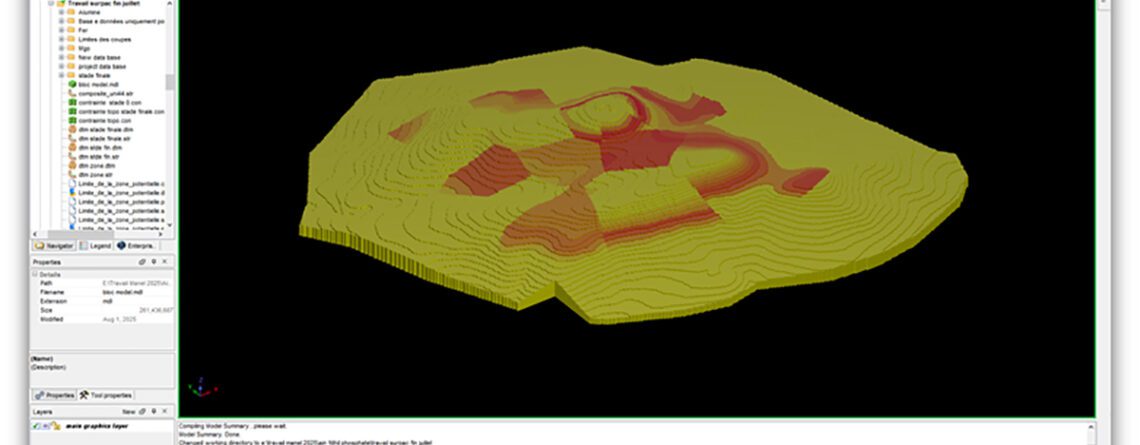
- Detailed geological characterization, through the development of lithostratigraphic logs and multidirectional spatial correlations, in order to understand the lateral and vertical evolution of phosphate-bearing formations. This phase was supported by 3D lithological modeling using GEOVIA SURPAC software;
- 3D geochemical characterization of the deposit, primarily based on phosphorous pentoxide (P₂O₅) content— a key indicator of phosphate quality — as well as the analysis of associated elements (Fe₂O₃, MgO, Al₂O₃), enabling a refined assessment of the quality of exploitable horizons;
- Integrated data interpretation, combining geological and geochemical results to improve the overall understanding of the deposit;
- Definition of a mining and development scheme, including the proposal of suitable extraction methods, the preparation of master plans compliant with environmental standards, and the production of Digital Terrain Models (DTMs) illustrating the different phases of mining and site development;
- Estimation of geological reserves, including a quantitative assessment of available resources and a classification of reserves according to rock quality within the exploitable area.
A Decision-Making Tool for Sustainable Resource Development
The primary objective of this study is to provide a reliable technical foundation for the planning and optimized management of the deposit’s exploitation. . It follows both a preventive and corrective approach, enabling the anticipation of constraints and improving the valorization of natural resources.
In this context, operational recommendations have been developed to support the project developer in bringing the identified zones into production, while ensuring sustainable reserve management and compliance with environmental requirements throughout the project lifecycle.
